

UPPER LEATHERS
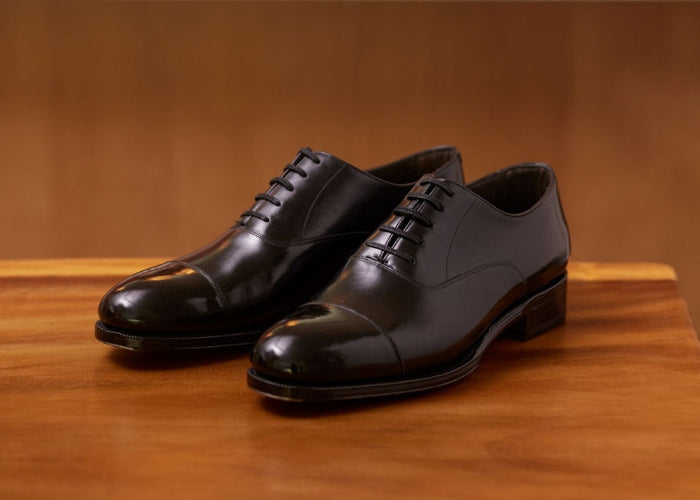
FULL GRAIN BOX CALF
This leather is the most natural form of leather, where the outermost grain of the hide is kept largely intact. Our full grain leathers are finished with an aniline finish, allowing the natural grain, character and depth of the leather to remain visible while giving it a rich, natural appearance.
Full-grain leather is versatile and works particularly well across both formal and casual styles. With regular brushing and occasional conditioning, the leather can be easily maintained and will gradually develop a unique patina with wear.
Creams and waxes can also be used to nourish, protect and enhance the depth of the leather over time. Our full-grain leathers are generally around 1.2–1.4 mm in thickness, offering a good balance between structure, durability and flexibility.
Over time, the leather softens and moulds naturally around the foot, becoming increasingly comfortable with wear while retaining its shape.
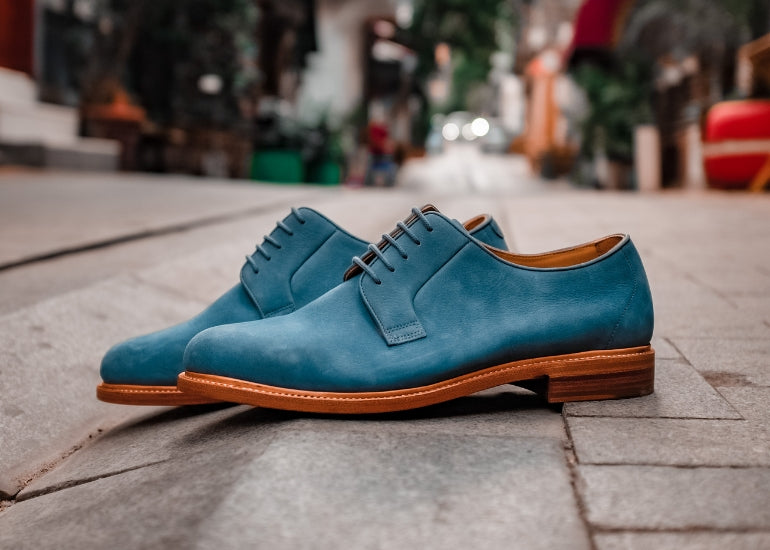
NUBUCK
This leather is closer to a full grain, where the tight top part of the skin is kept more or less intact and sanded down minimally, just enough to give it the soft velvet touch and feel.Used mostly for more casual styles, they get a lot of undue publicity for difficulty in maintenance. With a water proof spray on top, shoes from this leather type can actually be very easy to maintain as they don’t need any cream or wax like full grain leathers do. Our nubucks, like our naturally milled leathers, are of fuller substance of 1.8 - 2.0 mm thickness which help in shape retention and give a good, soft touch to the feet.
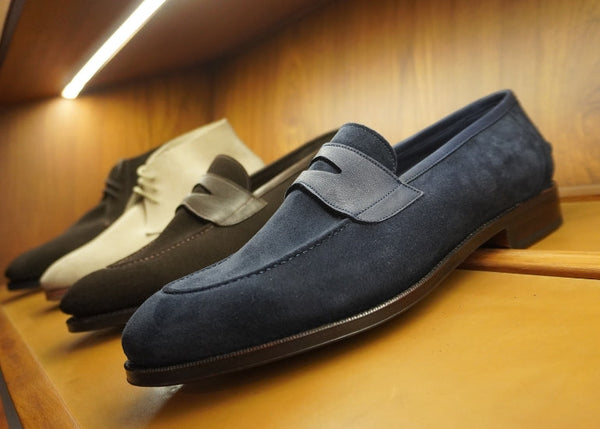
Reverse suede
Where the top grain is only slightly sanded down similar to nubuck, so it retains the strength of the hide but the reverse side(the flesh side) is treated to give it a nice short nap. This is rarely made by many tanneries, owing to difficulty in treating two sides of the same skin and achieving a matching colour on both. We use only the best from the tannery of Charles F. Stead in England, who pioneered this leather type and now increasingly used for unlined construction, where both sides can be appreciated.
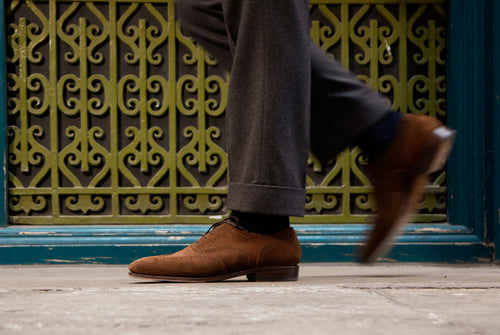
Suede calf skin
Where the hide is split in two parts, the bottom fleshy part is used to make suede, and the top part is used to make another product. Good suede will have a nice short nap, which means it will feel soft and velvety giving it a rich allure. Suedes are misunderstood as ‘not easy to maintain’ which couldn’t be further from the truth. A water-proof spray will ensure they are great even on a rainy day, and all you need is a suede brush to give it a nice sheen and remove surface level dust. Occasionally it can be cleaned with light soap water, so in many ways it's actually easier to maintain, than full grain box calf, which requires creams and waxes to keep the leather healthy.
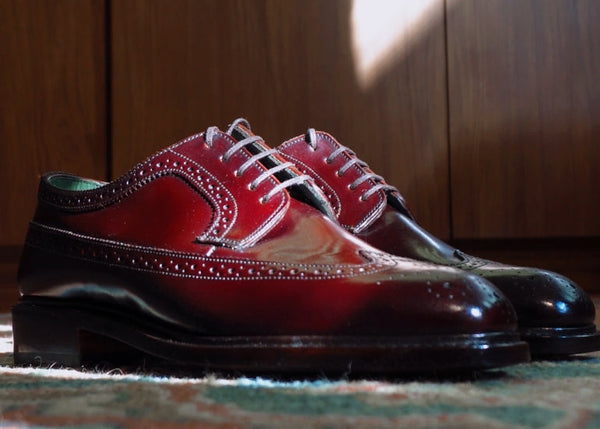
Shell Cordovan
Shell cordovan is a type of leather that is prized for its smooth, lustrous finish and rich colors. It is made from the fibrous flat connective tissue (or shell) beneath the hide on the rump of the horse. Shell cordovan is much more labor-intensive to produce than cowhide, and it ages very well, developing a particularly beautiful patina over time. The skill involved in making shell cordovan shoes is evident in every step of the process. From the selection of the leather to the final polishing, each step is performed with care and attention to detail.
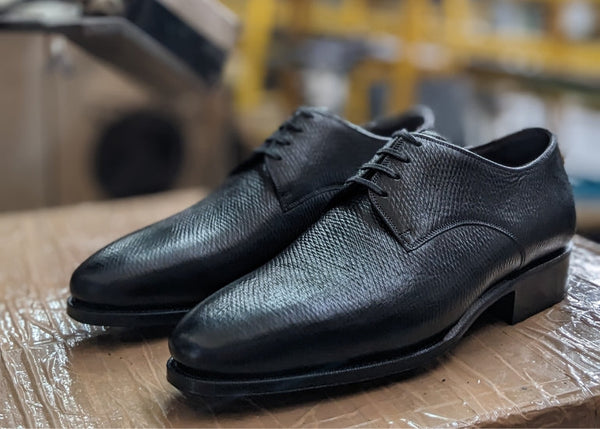
Russian Reindeer Calf
Reindeer calf leather was a prized commodity in Imperial Russia’s trade with the West. Its popularity rose until the Russian Revolution and in the chaos, disorder, and destruction that followed the secret art of the leather’s tanning was lost.That was until in 1973 when a chance discovery of a 200 year old shipwreck, Which held many rolls of this leather. F&FJ Baker reverse engineered the process. They are the only tannery that makes this leather.
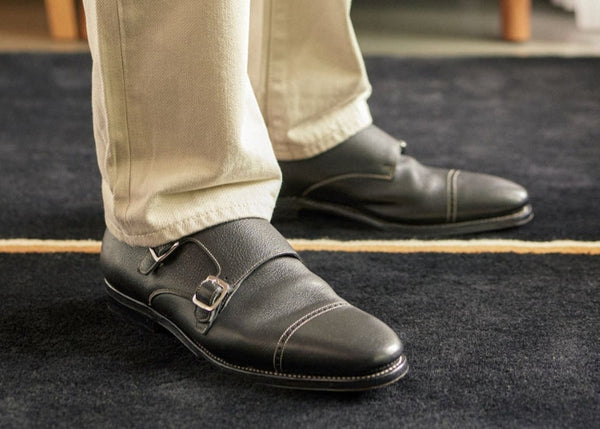
Naturally milled
The leather is much softer and ‘dyed through and through’ where the fat liquors penetrate the pores, fully making it inherently soft. But by using fuller substance, 1.8 - 2.0 mm thickness it helps in holding shape and giving a nice cushion-like effect to the wearer. The full skin will have a variable grain pattern where some parts might have a bold pattern and some a finer milling pattern. We work on a spectrum where no milling and very large milling patterns are avoided in the cutting of the leather. Small, medium and large milling patterns are cut pair by pair so there isn’t any variation between the left and right. The leather is tumbled in a dry drum which helps give it a soft pleasing texture.
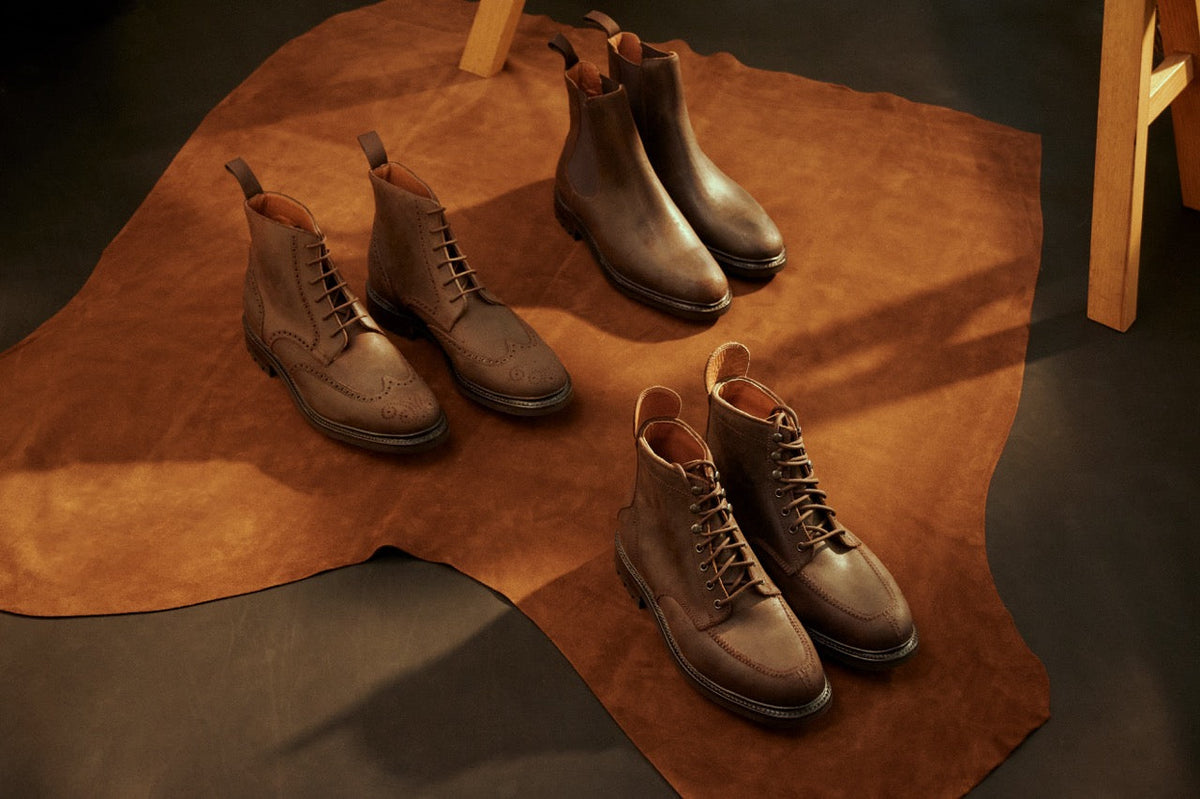
Waxy Commando
Original Waxy Commander is a rugged, high-performance leather with a unique look and feel. Made using a special tanning process that tightens the fibre structure, it resists stretching and holds its shape well. The leather is treated with a rich blend of waxes that bring out its natural texture and depth of colour as it ages. It’s fully waterproof, durable, and perfect for boots built to handle everyday wear in all conditions
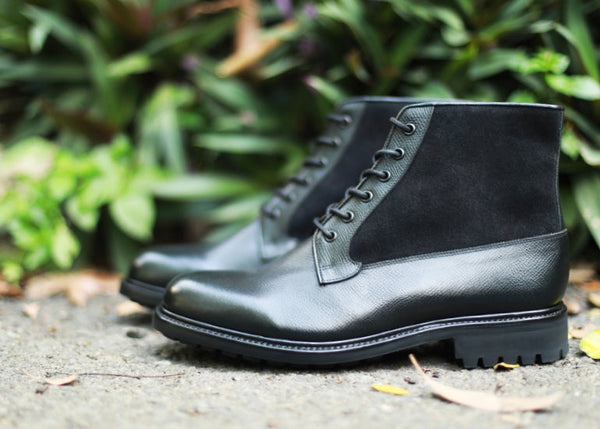
Textured
A heated printing plate is pressed on top of the leather giving it a distinct look and feel. A tad bit on the stiffer, this leather type is best suited for a more casual look, especially the pebble grain and the hatch grain.
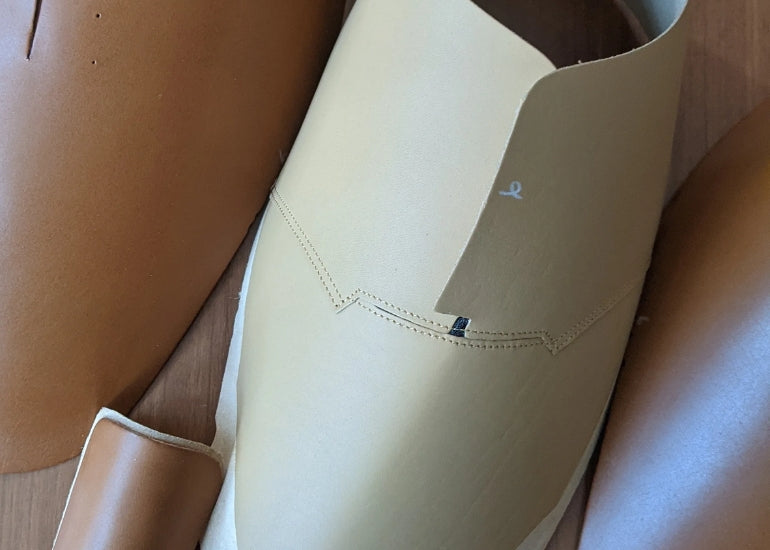
Drum dyed crust
Used in the lining of the shoe, where sweat absorption is important. Most linings are only upto 1 mm thick, rarely higher. However, we use 1.4 - 1.6 mm thick lining leathers, since we don’t use interlining materials and minimal adhesives between the upper and the lining. The thick lining further helps to hold the shape of the last, especially over time. The leather is dyed in the drum in the tanning process, as the name suggests, so no finishing dye solutions are sprayed on it, which may reduce its absorptive capacity. Lining leather can come in direct contact with your skin, so it's important that it is well ‘fixed’ making sure colours don’t bleed. All our lining leathers are made in local micro tanneries that are LWG certified.
Outsoles
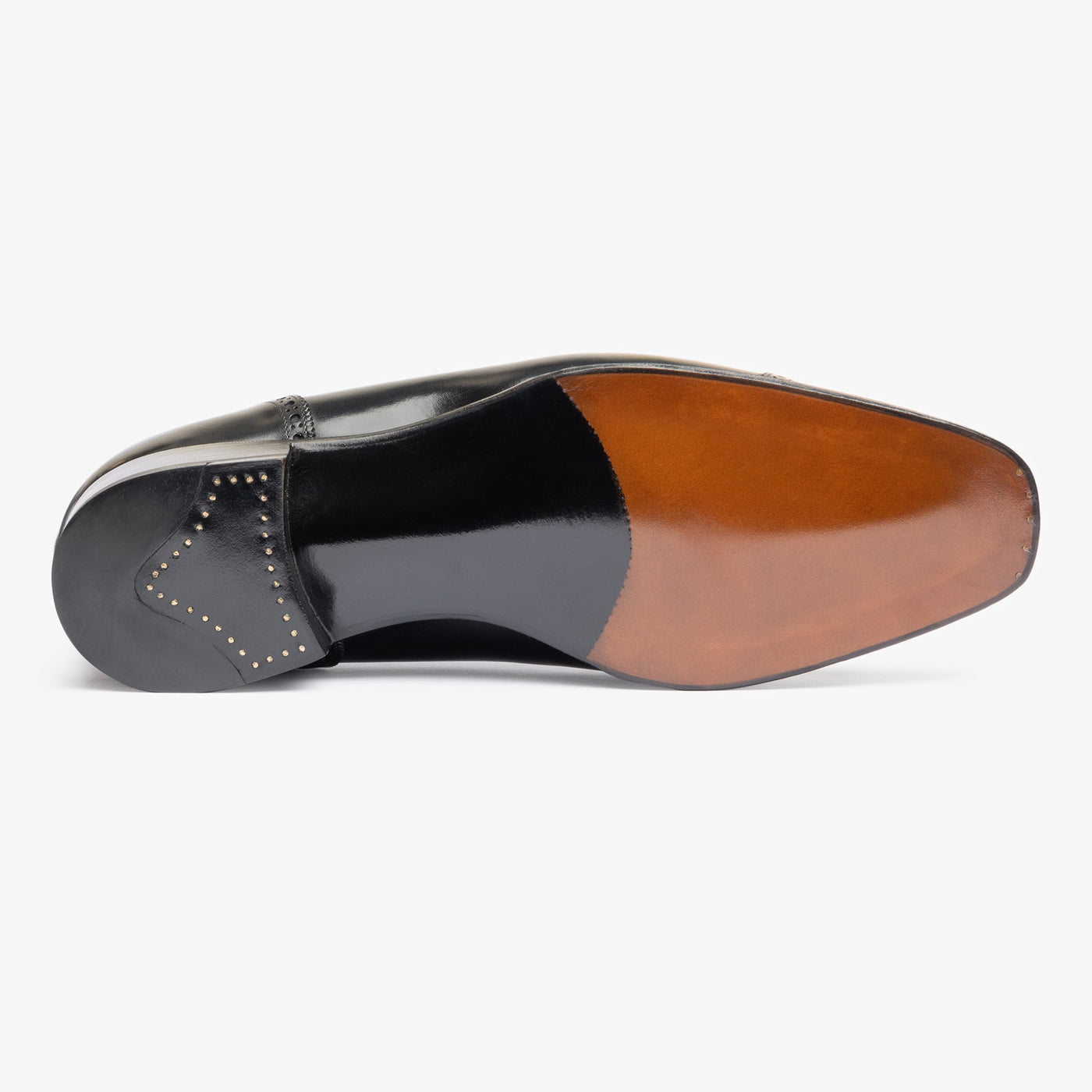
FJ Baker Bevelled Waist
J&FJ Baker has a time-long tradition of oak bark pit tanning locally sourced English wet-salted cattle hides. They started this process of making oak bark outsoles in 1862. they are the last remaining tannery in England to still use this process. Their unique passionate, sustainable, slow marinating process over some fourteen months yields a strong, hardwearing, even-coloured, lightweight and exclusive leather used by bespoke shoemakers around the world.
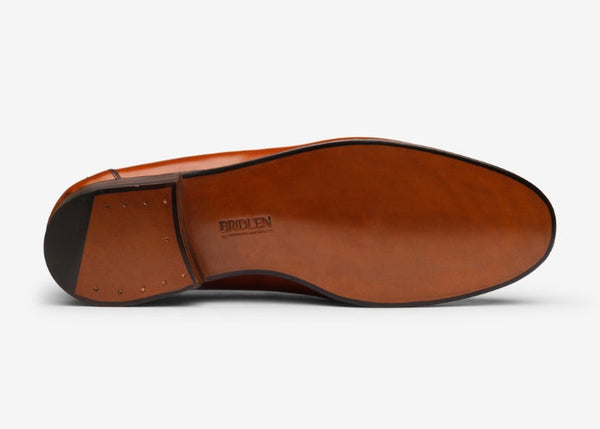
Italian Leather Sole
Closed channeled flexible leather outsole, made in Tuscany, Italy by traditional slow chestnut pit tanning method.
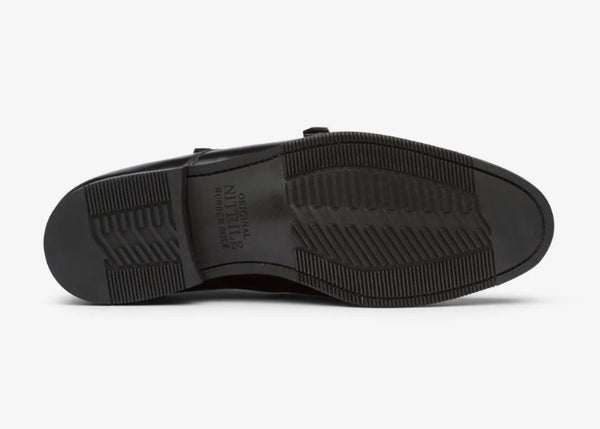
City Nitrile Rubber soles
The city and button soles made of nitrile rubber have excellent grip and abrasion resistance, superior oil resistance and good tear strength. The lugged rubber soled used only on the boots, uses a slightly different compound of rubber to give it some more flexibility. All our rubber soles are built to last for a long time.
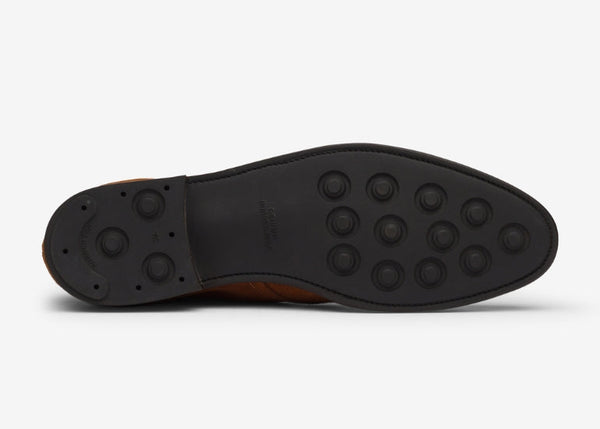
Button Rubber soles
The city and button soles made of nitrile rubber have excellent grip and abrasion resistance, superior oil resistance and good tear strength. The lugged rubber soled used only on the boots, uses a slightly different compound of rubber to give it some more flexibility. All our rubber soles are built to last for a long time.
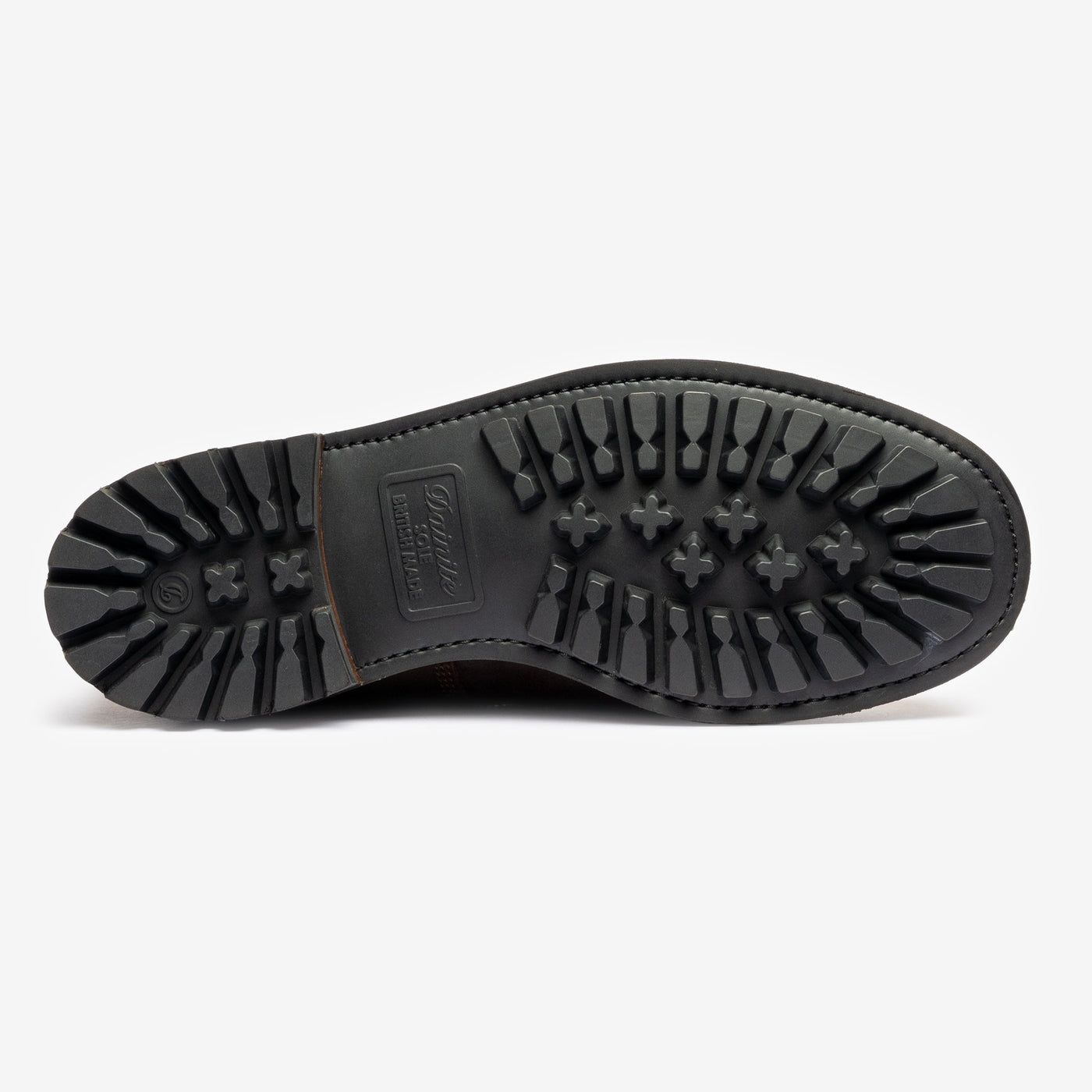
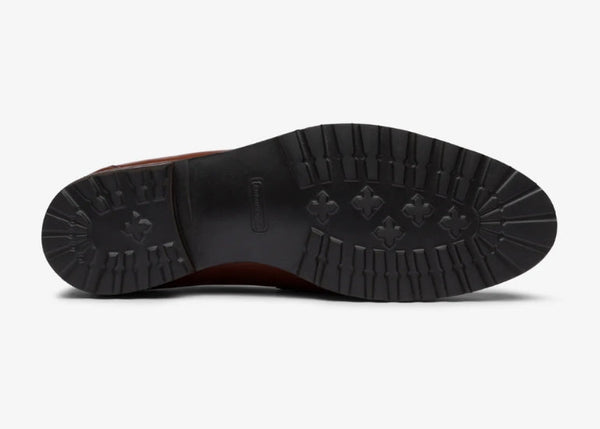
Dainite Lugged Rubber Sole
Also known as a Cleated Sole in the market, this type of sole has traditionally been associated with military boots and are commonly used in shoes for enhanced traction and durability. The rugged pattern of the sole provides a secure grip on various surfaces, making it suitable for outdoor and casual footwear. It is often utilized in boots and hiking shoes, offering stability and resistance to wear and tear in diverse environments.
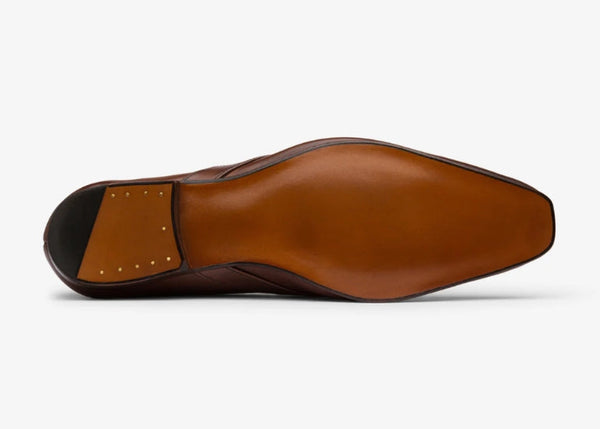
Slow pit tanned leather bends
Pit tanning takes 8 - 12 months to make, sometimes even more, depending on the thickness of the leather. The hides go through a natural dyeing and tanning process using vegetable extracts and tannins, from the bark of an oak tree, chestnut, mimosa , quebracho and other ingredients. Since heat is not used in the process, the natural steeping process over many different pits takes time and decades of experience to perfect. The end result is a tough, yet flexible sole, resistant to abrasion and naturally water resistant. We use the best from JR Rendenbach in Germany, J & F.J. Baker in England and a Tuscan tannery in Italy.
EVA
Soles made of Ethylene-Vinyl Acetate are lighter and flexible compared to rubber soles. Abrasion resistance and longevity is lesser, but they are well suited for a casual look. All our EVA soles are cemented to a leather midsole, so it will be easy to resole with another pair of EVA soles without affecting the integrity and other materials of the shoe.
OTHER MATERIALS
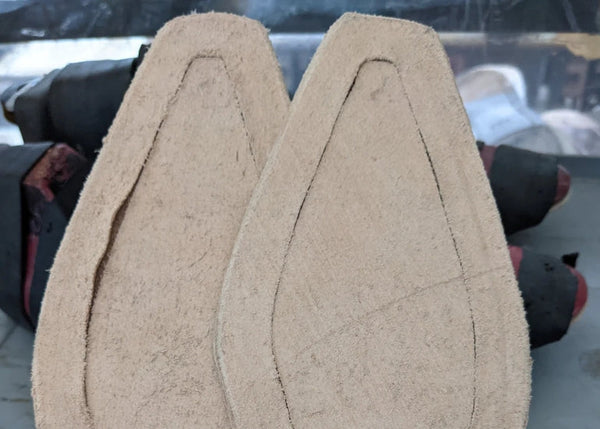
Insole
We use slow pit tanned flexible leather of 4 - 5 mm thickness that provides excellent durability and stability to the feet. Unlike artificially arched and soft cushioned insoles, over time the thick leather insole takes the shape of the feet, creating a personalized fit. This natural process takes a few wears, over time making the shoe extremely comfortable allowing you to wear it for extended periods of wear.
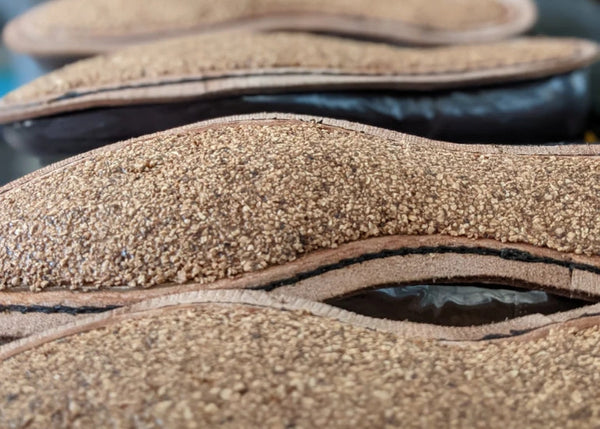
Loose cork
Shredded cork bits mixed with rubber solution to make a paste, is used between the insole and outsole to fill the cavity. Unlike compacted cork sheets that are brittle and cannot fully and effectively fill the gaps in between the insole and outsole, the loose cork and rubber solution mix from Portugal also help in making the shoe more comfortable, and take the indent of the foot over many wears.
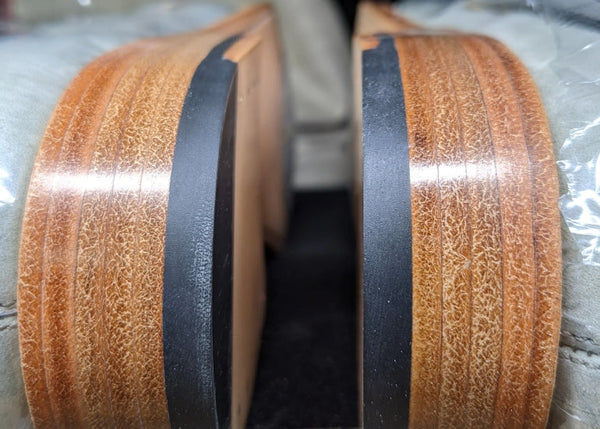
Stacked Heel
The heel block is made of the same leather bends as the outsole, stacked layer by layer and finished with a combination rubber top lift.
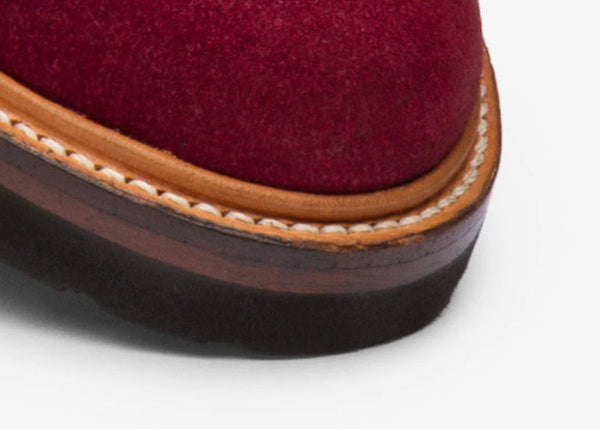
Welt
Flexible leather to match the side profile of the sole, we use a range of flat, split or storm welts depending on the shoe style and design process.
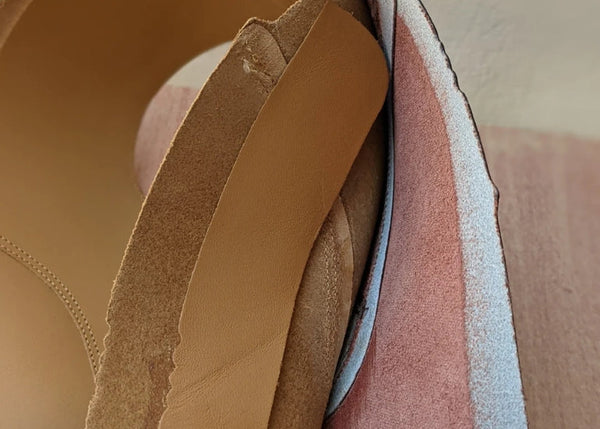
Stiffeners
They give the shoe definition of shape especially in the toe box and the counter(heel) area. We use leather board heel counters that will fit comfortably and mould around your heel.
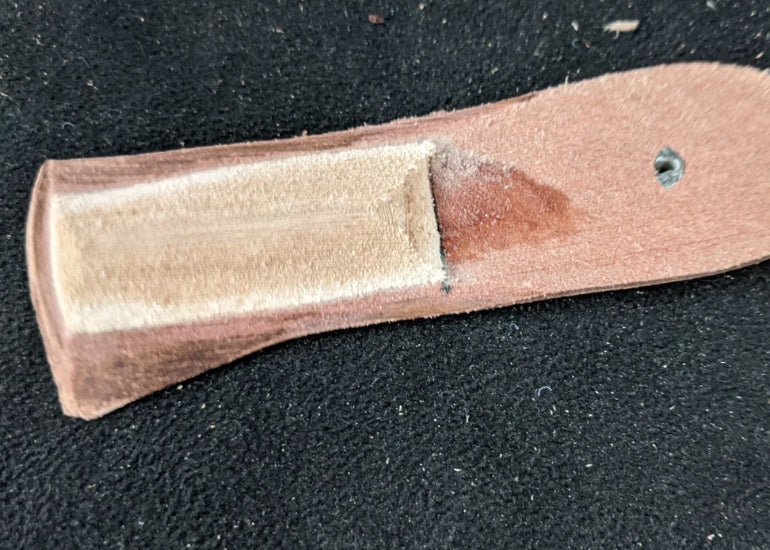
Leather Shank with metal
A leather shank with reinforced metal is used as opposed to a fully metal or plastic shank.